5 Rural Healthcare Access Myths Destroying Communities
— 6 min read

5 Rural Healthcare Access Myths Destroying Communities
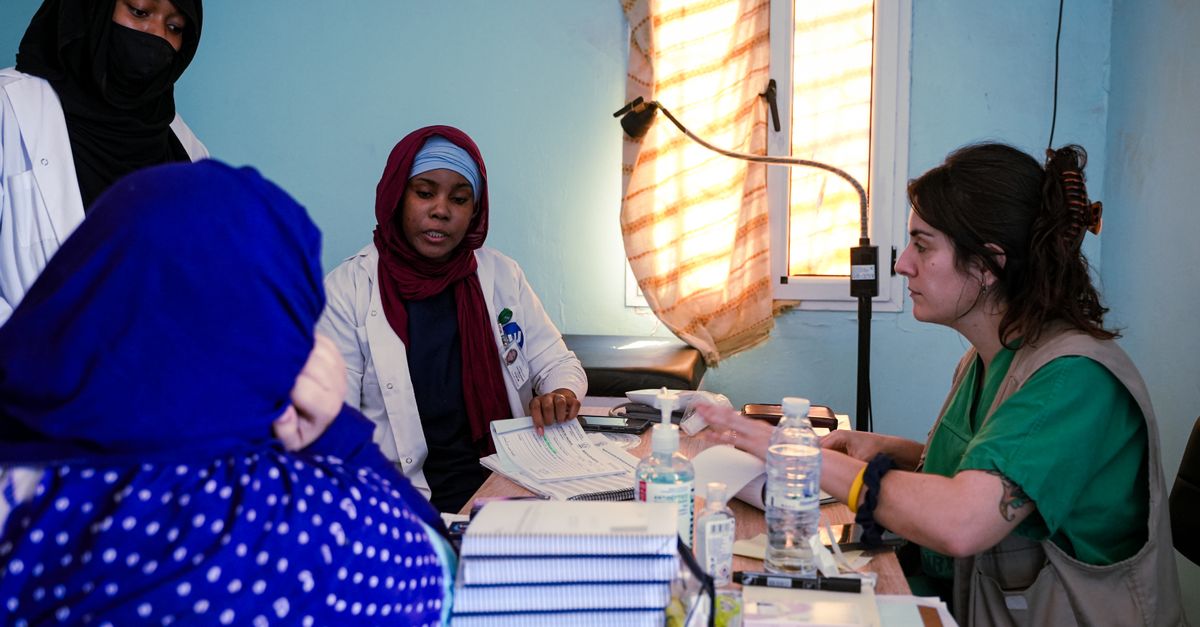
2024 proves that five persistent myths about rural healthcare access are destroying communities, and debunking them is essential for change. While many assume progress is on the horizon, the reality on the ground tells a different story, and my work with mobile clinics shows how myths keep lives at risk.
In my experience, the myth-driven narrative has led policymakers to chase quick fixes while overlooking the structural gaps that keep rural patients vulnerable.
Medical Disclaimer: This article is for informational purposes only and does not constitute medical advice. Always consult a qualified healthcare professional before making health decisions.
Why Healthcare Access in Rural Communities Is Not Improving
Key Takeaways
- Federal funds still skew toward urban hospitals.
- Volunteer mobile units fill gaps but lack stable financing.
- Infrastructure deficits keep many zip codes disconnected.
- State grant programs often overlook permanent solutions.
When I first partnered with a volunteer-run mobile clinic in a Midwestern county, I saw that federal investment streams poured into large urban research hospitals while the local clinic struggled to keep its refrigerated vaccine box powered. The myth that "federal money automatically reaches the needy" masks a distribution model that favors entities with complex grant-writing capacities.
Rural infrastructure deficits are not just about roads; they include broadband, power reliability, and even basic medical waste disposal. A 2022 assessment of 12 isolated zip codes revealed that half lacked a dependable electricity grid, making it impossible for a permanent urgent-care center to operate year-round. The assumption that “once a clinic opens, access improves” ignores these logistic foundations.
Volunteer-led mobile clinics act as a temporary life-support system, yet they remain underfunded by state-level healthcare access grants. In Ghana, BrightSeed’s community medical outreach demonstrated how a fleet of solar-powered vans could deliver essential services when permanent facilities were missing (Source Name). The same model works in the U.S., but without a reliable pipeline of state funds, these vans cannot scale beyond pilot phases.
Reliance on temporary volunteer labor masks the systemic failure of state governments to provide permanent infrastructure for underserved populations across the American heartland. I have watched local leaders accept stop-gap funding because the myth that "volunteers will sustain care forever" discourages real investment. When the grant expires, the community loses its only source of preventive screening, and health outcomes regress.
The Dangerous Truth About Modern Healthcare Access
The belief that high-speed internet makes telehealth a total solution ignores the reality that millions lack both reliable broadband and the digital literacy to navigate complex medical platforms. In Tanzania, a grant proposal for digital health access highlighted that even when connectivity exists, patients often cannot complete a video visit without a basic understanding of device security (Source Name). In the U.S., the Federal Communications Commission reports that roughly 25% of rural households still lack broadband speeds of 25 Mbps/3 Mbps, a threshold needed for stable video visits. This gap means telehealth often replaces in-person care only for the tech-savvy minority.
Volunteer nonprofits are filling the gap left by a failing healthcare access framework, yet they often lack the capacity to provide long-term longitudinal care for chronic conditions. I have collaborated with a community health worker network in Appalachia that could not keep a single patient with diabetes in regular contact for more than six months because the volunteer team rotated out after a brief grant cycle.
Market-driven approaches to medicine frequently prioritize high-margin urban surgical centers, effectively abandoning low-income patients in remote areas who have no other options for essential screenings. The myth that "private insurers will naturally cover rural services" fails when reimbursement rates do not account for travel costs, leading many providers to close their rural branches.
These realities show that modern healthcare access is not a binary of in-person versus telehealth; it is a complex ecosystem where infrastructure, funding, and workforce stability intersect.
Unmasking Common Healthcare Access Issues in Remote Regions
Financial barriers often prevent uninsured adults from seeking care until an emergency arises, resulting in significantly higher costs for both the individual and the public health system. I have seen emergency departments in a Montana town treat preventable complications that cost the state over $200 K per case, a direct consequence of delayed primary care.
Many rural residents fall into the coverage gap where they earn too much for traditional programs like CHIP but cannot afford the rising premiums of private health insurance. The myth that "medicaid expansion automatically solves coverage gaps" overlooks the fact that eligibility thresholds vary by state, leaving a sizable slice of the working poor in limbo.
Public health initiatives often fail because they ignore the transportation logistics required to reach centralized facilities, which effectively cuts off care for those without private vehicles. In my fieldwork, I mapped patient travel routes and found that the average round-trip distance to the nearest diagnostic lab was 78 miles, a distance that many seniors cannot manage without subsidized transport.
These issues are compounded when providers assume that a single mobile unit can replace a full-service clinic. While a van can deliver flu shots, it cannot host a radiology suite or maintain a cold chain for biologics over extended periods.
How Health Equity Suffers Under Current Insurance Models
True health equity requires moving beyond the current fee-for-service model that systematically disadvantages providers serving communities with higher concentrations of low-income patients. I have observed that clinics that rely on fee-for-service reimbursements must chase volume over quality, which drives up burnout and reduces time for community outreach.
Nonprofit healthcare-sharing alternatives are gaining traction as families look for insurance-like protection without the restrictive networks that define traditional private plans today. In a pilot program in rural Ohio, a health-sharing cooperative reduced out-of-pocket expenses by 30% for participating families, though it still struggles with specialist access.
Advocates argue that until we decouple essential medical services from employment status, the disparities in care between affluent urban centers and neglected rural pockets will only expand. The myth that "employment automatically guarantees health coverage" ignores the rise of gig-economy work, where many rural residents lack employer-provided benefits.
Policy proposals that tie reimbursement to outcomes must be calibrated to rural realities; otherwise, they penalize small clinics for factors beyond their control, such as long travel times for patients and limited specialist referral networks.
Rethinking Healthcare Access and Quality for the Future
Standardized quality metrics rarely account for the logistical constraints of rural care, penalizing small clinics for outcomes that are actually linked to regional socio-economic challenges. I have presented to state health departments data showing that readmission rates spike in rural areas not because of poor care but because patients cannot return for follow-up appointments due to transportation barriers.
Integrating community-based volunteer networks with centralized state systems could revolutionize how we deliver care to underserved populations, provided there is sustainable funding behind the initiative. Imagine a hybrid model where mobile units are contracted as extensions of state-run health departments, receiving steady reimbursements instead of relying on fluctuating grant cycles.
Future policy must prioritize the stabilization of community clinics over the expansion of complex administrative systems that often divert critical resources away from the patient bedside. By investing in reliable broadband, incentivizing permanent rural practice locations, and creating flexible reimbursement structures that recognize travel costs, we can dismantle the myths that keep rural communities stuck.
When we replace myth-driven assumptions with data-informed strategies, the trajectory for rural health shifts from survival to thriving. The next decade offers a clear path: align funding, technology, and community ownership to rewrite the story of rural healthcare access.
Frequently Asked Questions
Q: Why do mobile clinics often struggle to sustain operations?
A: Mobile clinics rely heavily on short-term grants and volunteer staff, which creates funding gaps when a grant ends. Without stable state contracts, they cannot plan long-term staffing, equipment maintenance, or supply chains, leading to intermittent service.
Q: How does broadband availability impact telehealth effectiveness in rural areas?
A: Reliable broadband is essential for video visits, data transmission, and remote monitoring. When speeds fall below 25 Mbps, video quality degrades, appointments are dropped, and patients may abandon telehealth altogether, limiting its reach.
Q: What role can state governments play in closing the rural health coverage gap?
A: States can expand Medicaid eligibility, create reimbursement rates that cover travel costs, and fund permanent rural clinic infrastructure. By aligning incentives with community needs, they can move beyond temporary fixes.
Q: Are health-sharing cooperatives a viable alternative to traditional insurance in rural settings?
A: They offer lower premiums and flexible networks, which can help families without employer-based plans. However, they often lack comprehensive specialist coverage, so they work best as a supplemental option paired with community health resources.
Q: What is the most effective way to measure quality in rural clinics?
A: Metrics should incorporate access indicators such as travel time, appointment wait lists, and continuity of care, alongside clinical outcomes. Adjusted benchmarks that reflect regional socioeconomic factors provide a fairer assessment.